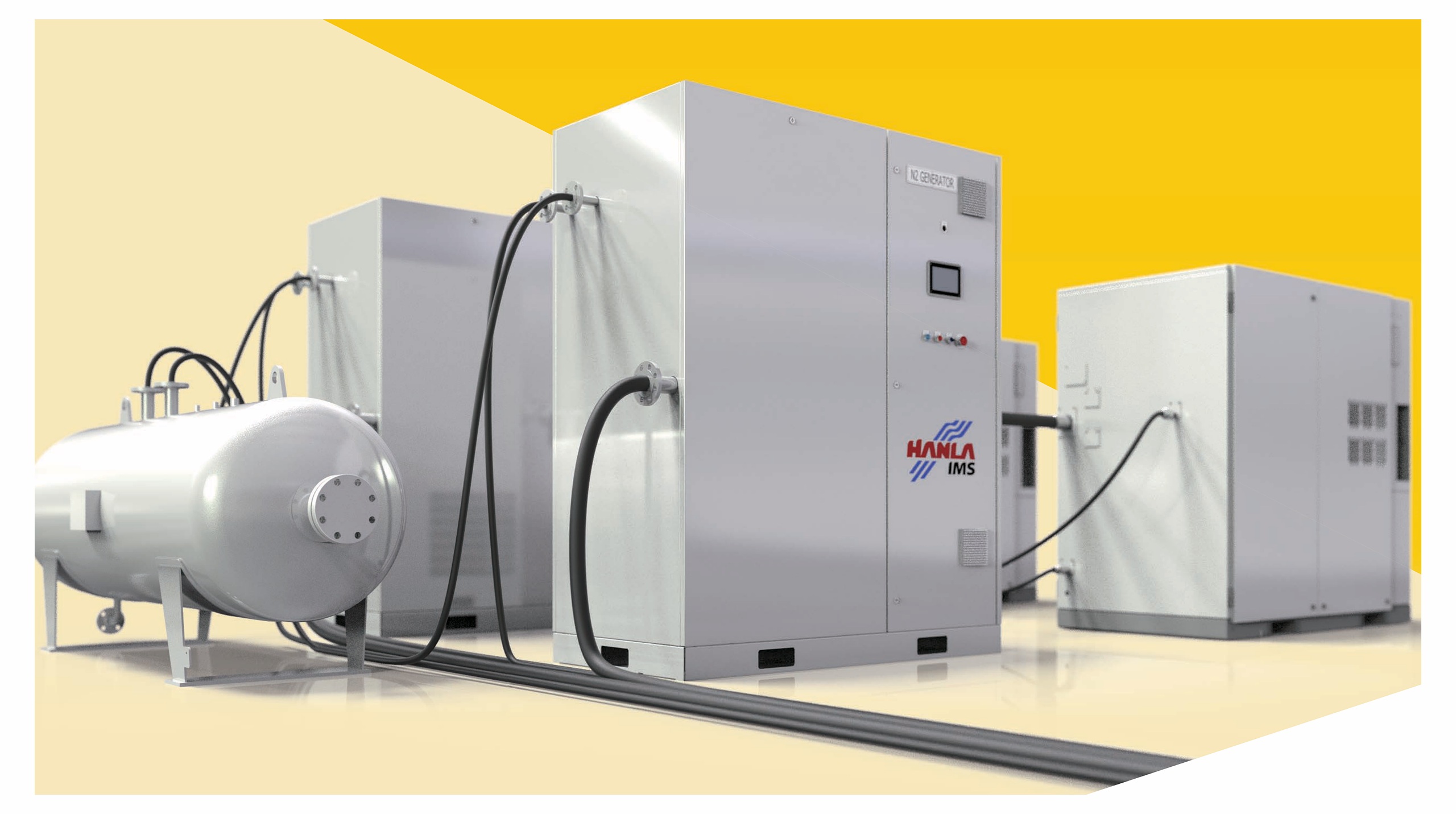
NTGT series membrane nitrogen generator. Up to 300 Nm³/h at 97% purity, made from the ship’s own compressed air, so there are no cylinders to store or replace. ABS type approved.
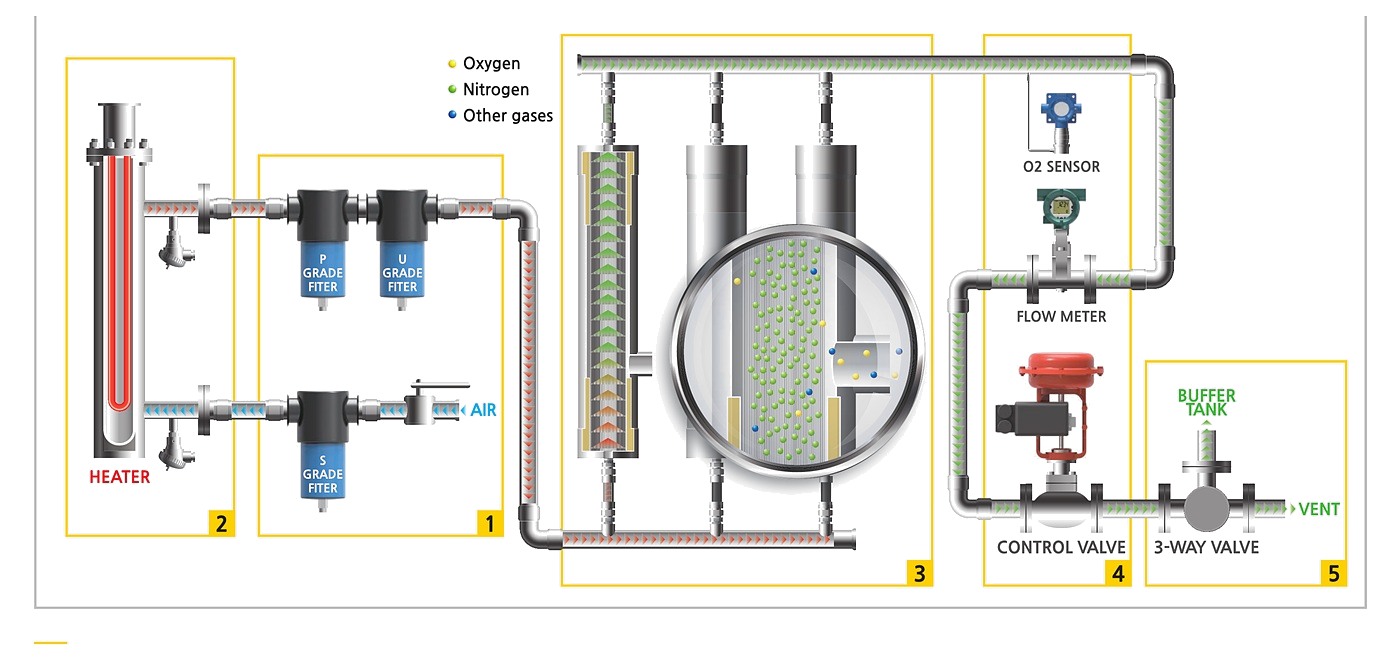
Filter, heater, membrane, control valve and buffer tank
Nitrogen is separated from compressed air across a membrane rather than stored. Air from the ship’s compressor is cleaned and warmed, then passed through hollow fibres: oxygen diffuses out through the fibre wall quickly, nitrogen does not, and what carries on to the outlet is nitrogen at the purity the system is set to hold.
1. Filter — U, P and S grade
Air from the compressor enters the generator panel and passes the filters, which take out oil and solid particles. Separated oil and moisture are discharged automatically by a filter drain unit, and a differential pressure gauge shows when the elements are due for change
2. Heater
Air temperature decides the quality. At the right temperature the moisture and liquid oil evaporate and the nitrogen yield rises. A heat controller monitors the temperature and holds it steady
3. Membrane
Compressed air flows into hollow fibres. Oxygen, carbon dioxide and the other components diffuse out rapidly; nitrogen has a low diffusion rate and passes on. Capacity follows the flow rate, temperature and pressure the compressor delivers
4. Automatic control
The control panel watches the oxygen concentration and the nitrogen flow, and works an automatic control valve. Above 3.5% oxygen the operator gets an alarm; above 4% the system shuts down
5. Charge and discharge
Nitrogen is charged to the buffer tank up to 10 bar and recharges automatically when the tank falls below 5 bar, both adjustable. Nitrogen that does not meet the set quality goes out through the exhaust line rather than into the tank
Specification
Model
NTGT series, numbered by capacity — NTGT-160 is the 160 Nm³/h unit
Operating principle
Membrane separation
Membrane arrangement
Parallel
Location
Safe area, weather protected. Control section IP44
Capacity
Up to 300 Nm³/h
Nitrogen purity
97 vol%
Dew point
−65 °C at atmospheric pressure
Outlet pressure
10 barg at the generator outlet (process design)
Buffer tank start / stop
5 to 10 barg, adjustable
Outlet temperature
50 °C maximum
Filtration
Particle size 0.01 µm and oil removal 99.99%, both ISO 8573.1:2009 class 1
Heater supply
440 V / 60 Hz / 3 ph, 4 kW
Control panel supply
220 V / 60 Hz / 1 ph, 0.5 kW
Monitoring and control
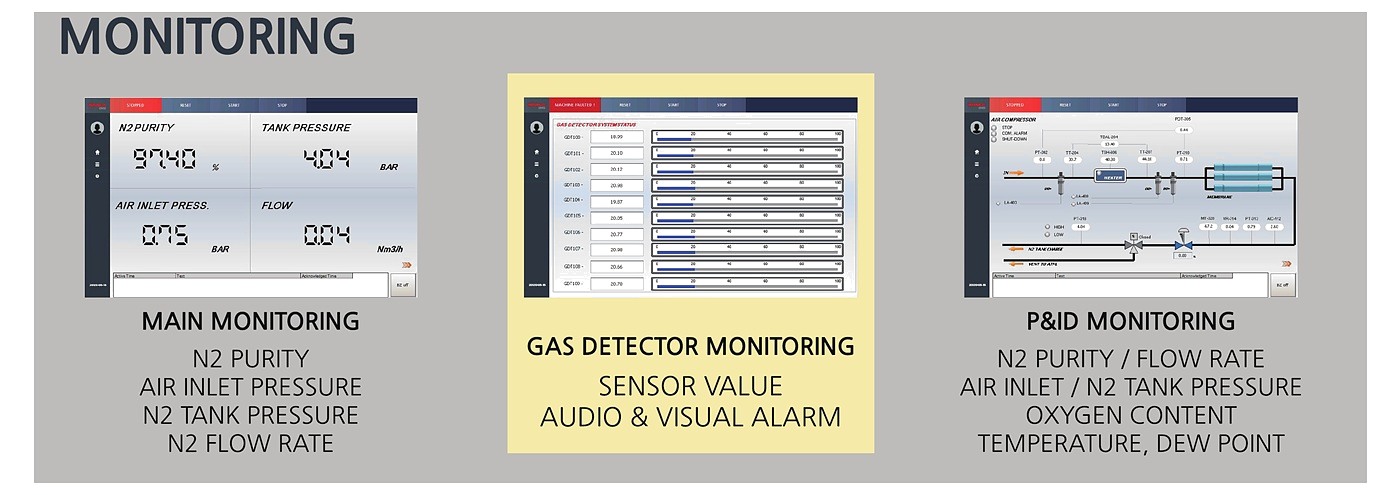
Main monitoring, gas detector monitoring and the P&ID screen
Main screen
Nitrogen purity, air inlet pressure, nitrogen tank pressure and nitrogen flow rate
P&ID screen
The same readings against the plant diagram, with oxygen content, temperature and dew point
Gas detector screen
Sensor values with audible and visual alarm. Supplied as an option
Interface
PLC and human machine interface with a touch screen, buzzer, alarm lamp and emergency stop
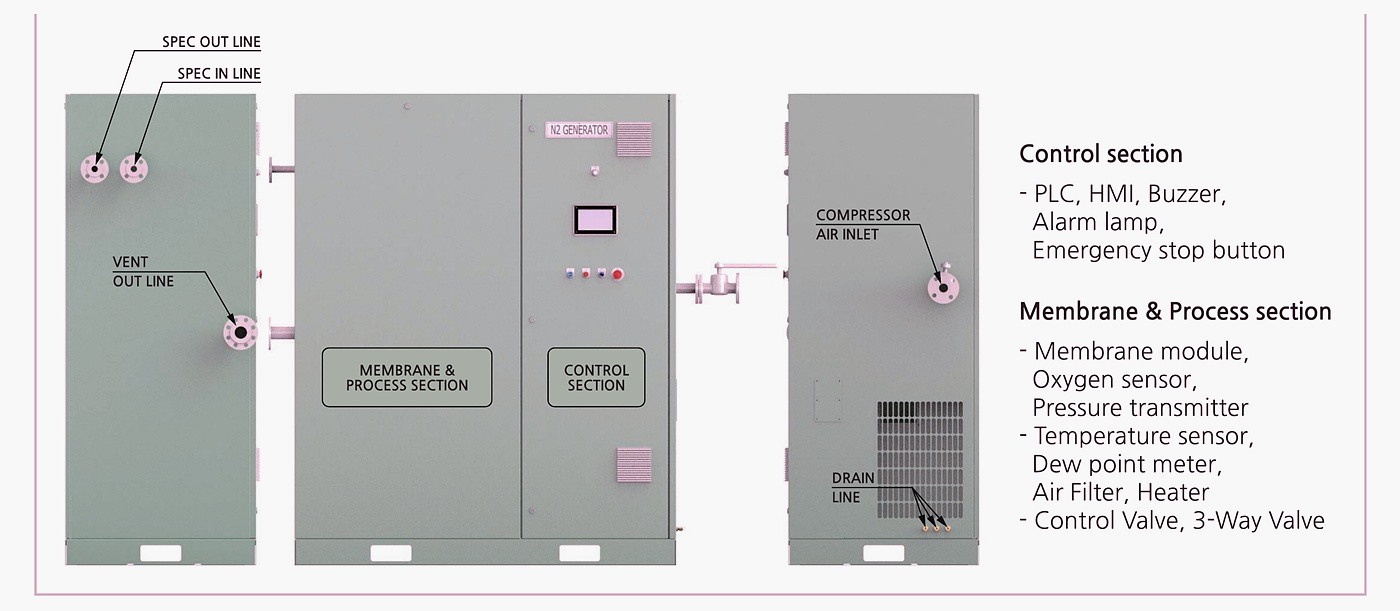
The unit
Control section and membrane and process section, with the service connections
Control section
PLC, human machine interface, buzzer, alarm lamp and emergency stop button. IP44
Membrane and process section
Membrane module, oxygen sensor, pressure transmitter, temperature sensor, dew point meter, air filter, heater, control valve and three-way valve
Connections
Compressor air inlet, specification in and out lines, vent out line and drain line
Features and options
Parameters adjustable from the panel
Remote control
Serial communication to the ship’s systems — Modbus RTU over RS-485, as an option
Gas detection monitoring, as an option
Dual system with cross over, where a second train is wanted
ABS type approval
Send the nitrogen demand in Nm³/h, the purity you need and the air the compressor can deliver, and we will size the unit and quote.
07 — Enquiries
Tell us what the vessel needs.
Send drawings, specifications or a parts list and we will come back with availability and pricing.