
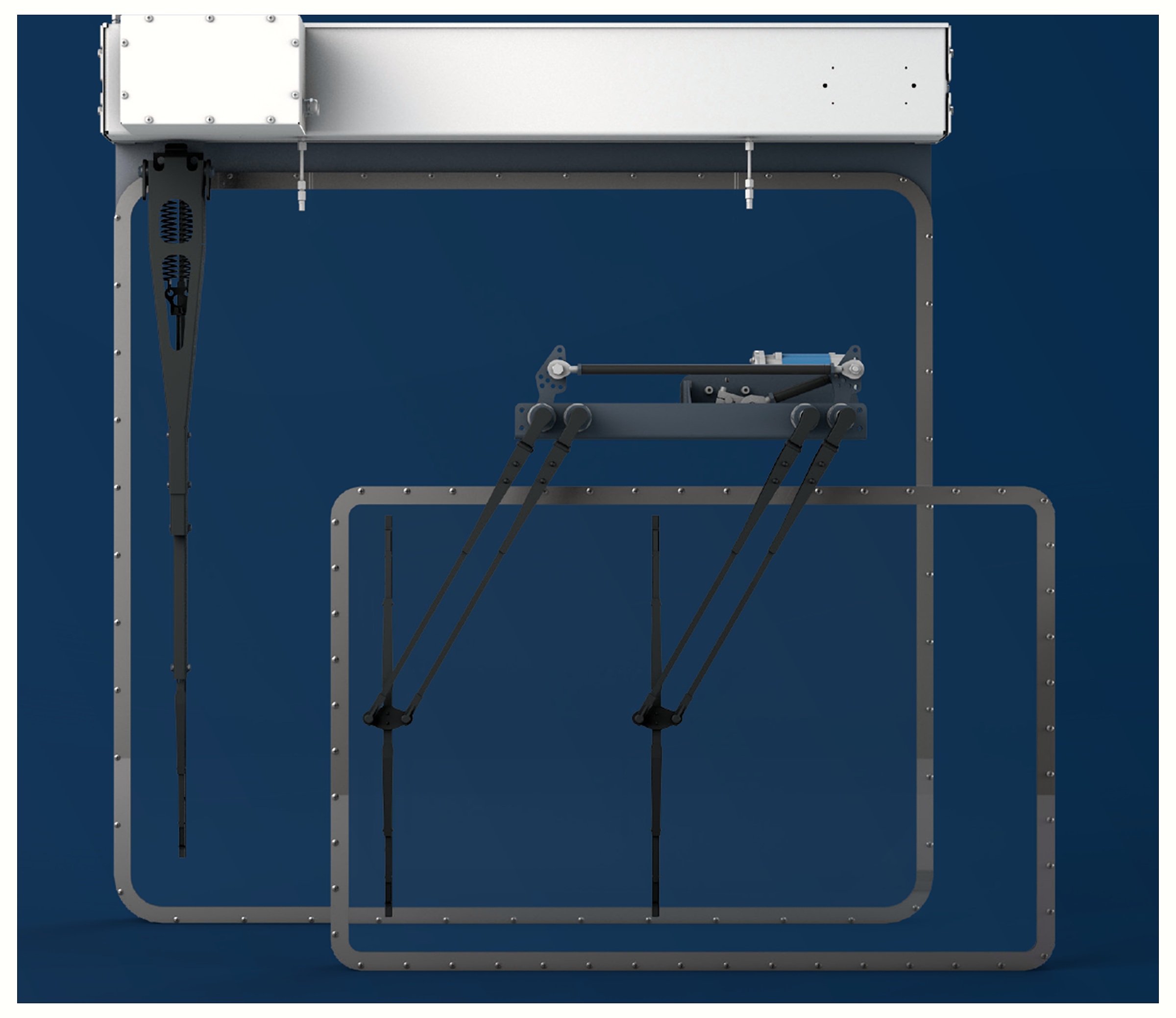
Bohamet pantograph, straight-line and pendulum window wipers for wheelhouse and bridge glazing. Drives in 24 or 230 V, blades up to 1,600 mm, arms and blades that hold up past 480 hours of salt spray, and control from a single rotary switch up to a networked touch panel running 80 wipers.
On this page
- Pantograph wipers›
- Horizontal (straight line) wipers›
- Pendulum wipers›
- Arms and blades›
- Control panels and modules›
- Washing systems›
- Accessories›
- Approvals and testing›
- Choosing a wiper›
Pantograph wipers
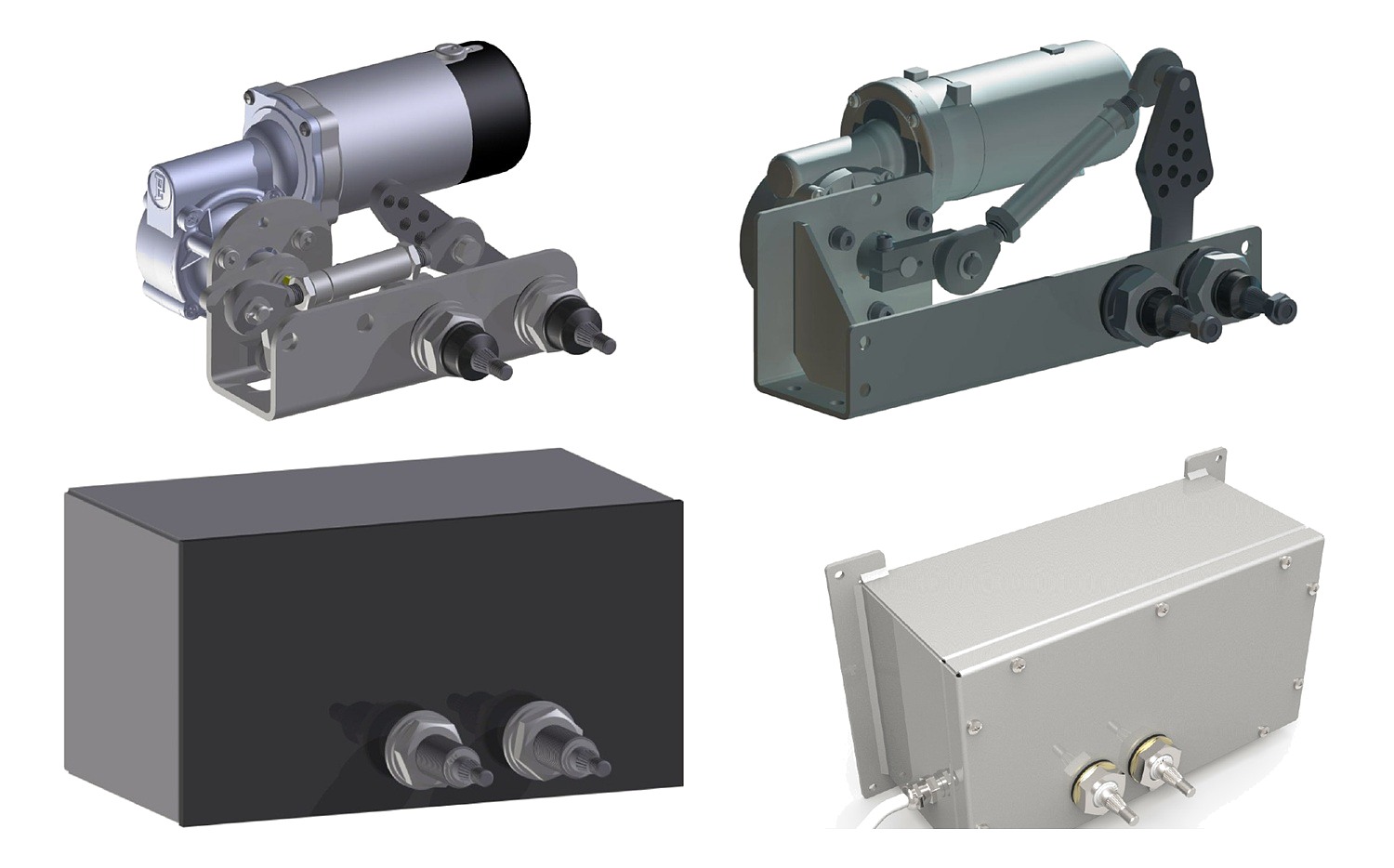
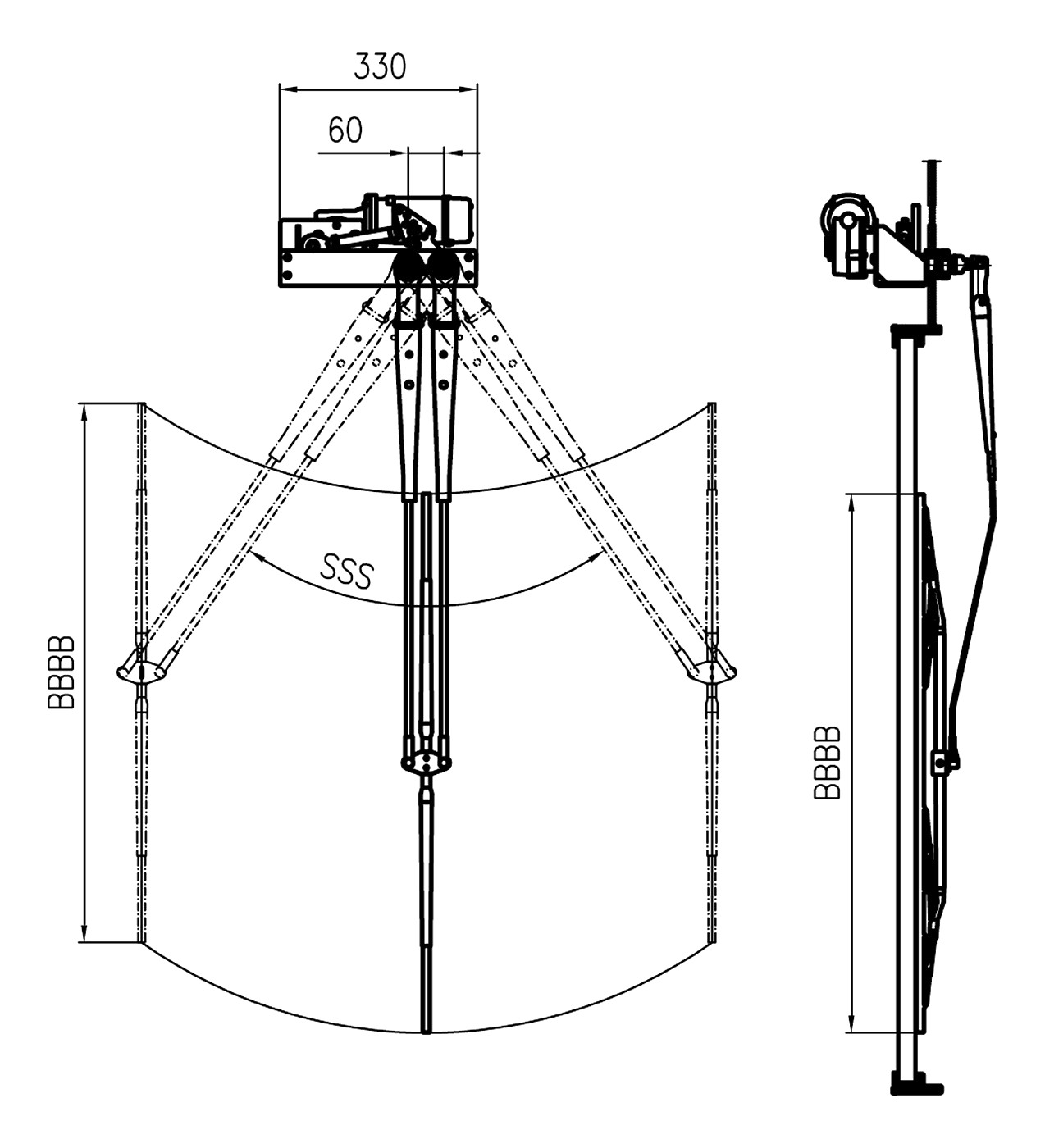
A pantograph wiper drives two arms from one shaft, so the blade stays roughly vertical through the stroke and sweeps a wide curved band across the glass. Bohamet builds five variants on the same principle. They differ in duty, in where the drive sits, and in how it is protected — which is usually what decides the choice, rather than the wiping pattern.
| Type | Built for | Motor | Operating range (SSS) | Arm length (AAAA) | Blade length (BBBB) | Mechanism width |
|---|---|---|---|---|---|---|
| W40.16-A | Smaller and narrower windows | 24 or 230 VDC | 34.0° to 90.0° | 400 – 800 mm | 350 – 800 mm | 212 mm |
| W60.16-A | Heavy-duty applications | 24 or 230 VDC | 31.0° to 93.4° | 400 – 1,200 mm | 350 – 1,600 mm | 330 mm |
| W60.16-A.02 | Very wide windows needing maximum cleared area | 24 or 230 VDC | 31.0° to 93.4° | 400 – 1,200 mm | 350 – 1,600 mm | 900 mm |
| W40.16-A.C | Mounting directly on the glass, fixed or opening window | 24 or 230 VDC | 34.0° to 90.0° | 400 – 800 mm | 350 – 800 mm | 250 mm |
| W60.16-Z | No space for an exposed drive inside the ship | 24 or 230 V | 31.0° to 93.4° | 400 – 1,200 mm | 350 – 1,600 mm | 400 mm |
The 2016 catalogue prints the W60.16-Z blade range as “350 mm to 160 mm”; the figure shown here is 1,600 mm, matching the W60.16-A mechanism it shares. Confirm on order.
W40.16-A and W60.16-A are the two standard drives, both built for high durability and long service life — the W40 for smaller and narrower windows, the W60 for heavy-duty work with longer arms and blades.
W40.16-A.C assembles with two holes and a seal, so it mounts straight onto the glass on either a fixed or an opening window. Compact and lightweight, with the mechanism enclosed in a plain box.
W60.16-Z answers the case where there is no room for a mechanism inside the ship. The drive sits in a sealed IP67 housing with the shafts passing through the plating, so the mechanism is inboard and protected while the arms work outside.
Horizontal (straight line) wipers
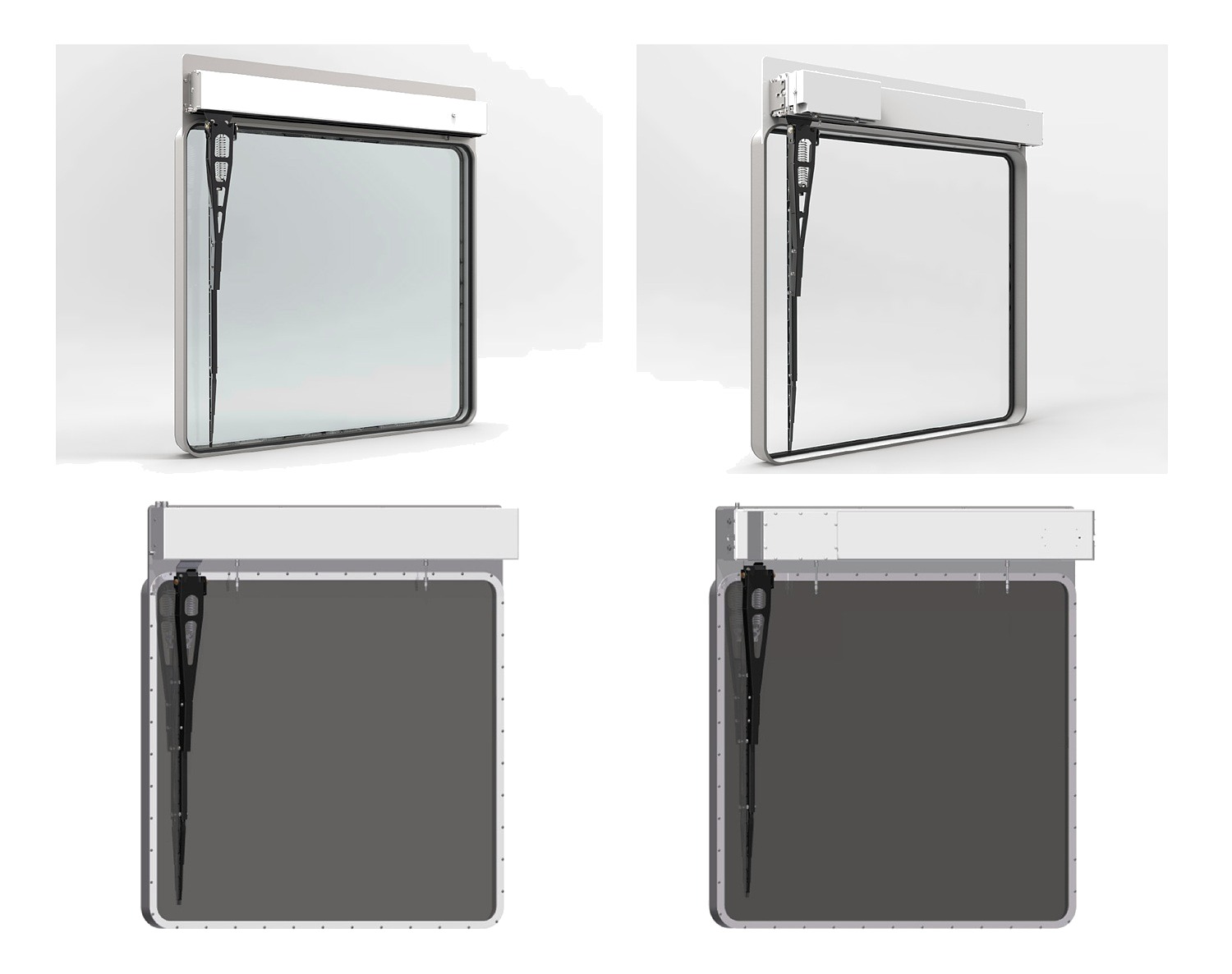
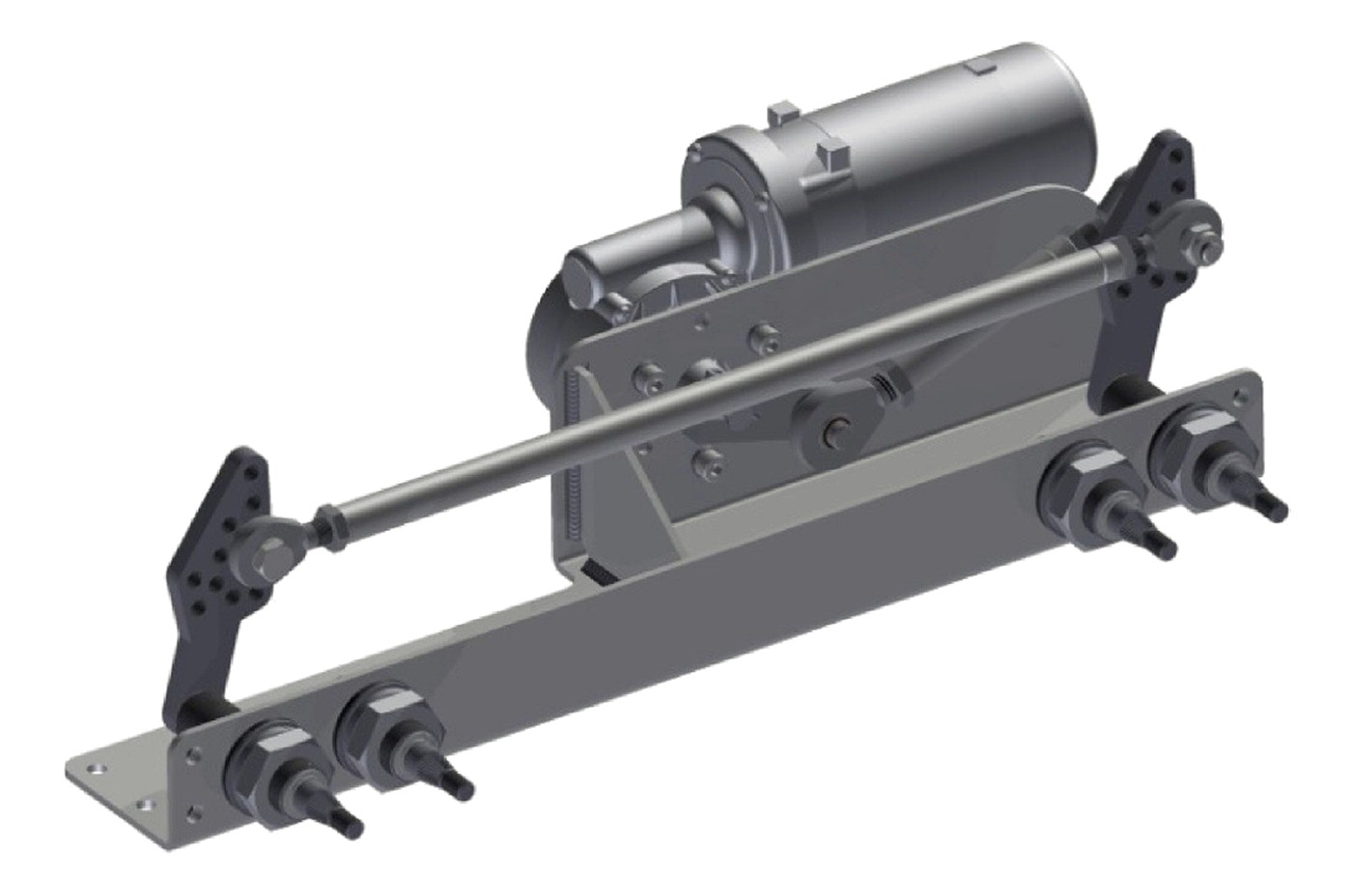
A straight-line wiper carries the blade across the window on a horizontal track rather than swinging it through an arc, so it clears a rectangle. On a modern rectangular bridge window that covers a far larger share of the glass than any pantograph can reach, which is the whole reason for the type.
Two things separate the variants: which generation the wiper belongs to, and whether the drive sits inside the wheelhouse or outside in a sealed housing on the cassette. Putting the motor outside frees space inboard and lets the wiper fix independently of the ship plating; keeping it inside puts the motor in a protected environment.
| Type | Series | Motor position | Operating range (SSS) | Arm (AAAA) | Blade (BBBB) | End dimensions |
|---|---|---|---|---|---|---|
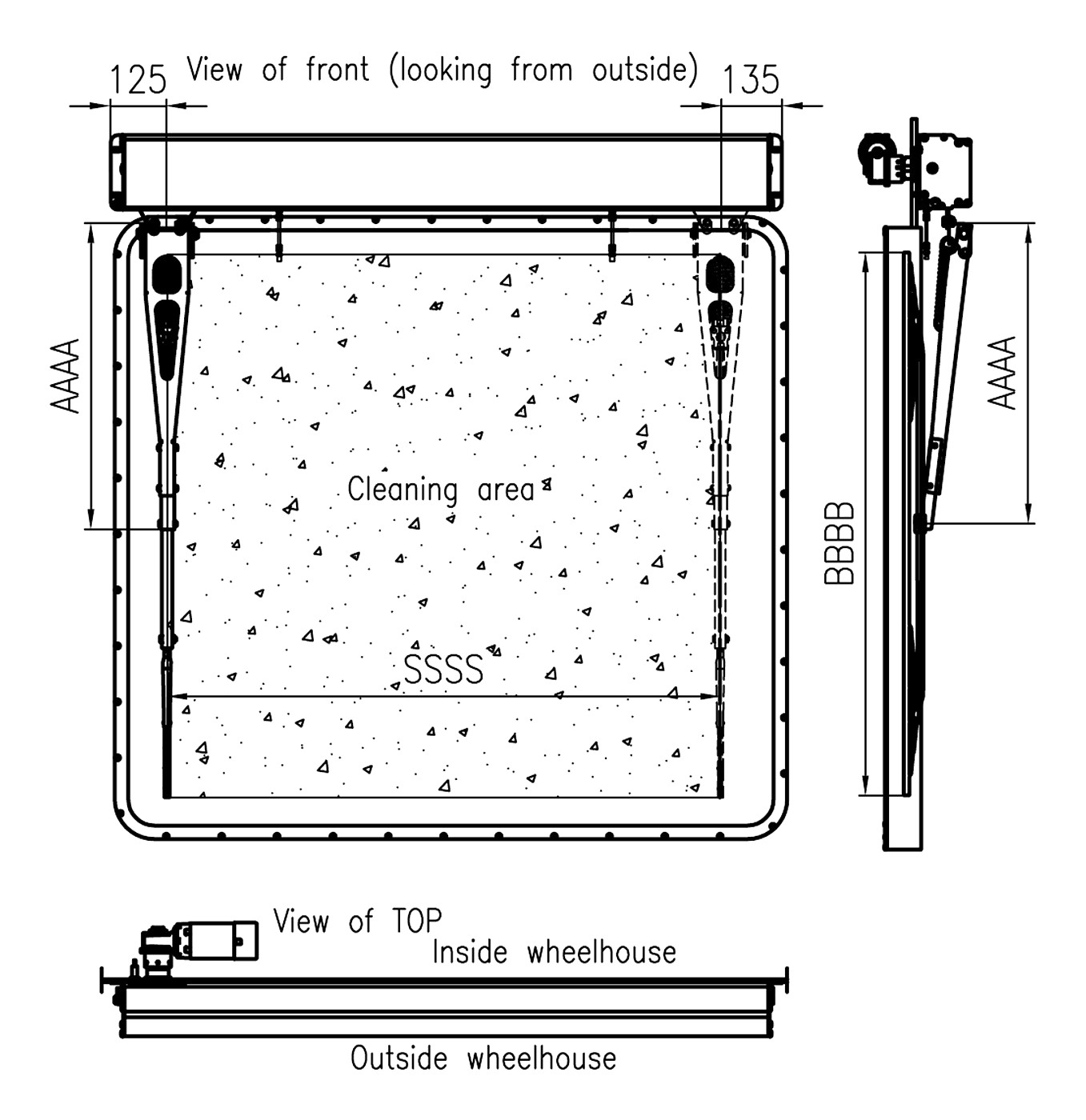
| WAL.I.2100 | 2100 aluminium | Inside the wheelhouse | 300 – 3,500 mm | 400 – 1,500 mm | 400 – 1,600 mm | 125 / 135 mm |
| WAL.E.2100 | 2100 aluminium | Outside, sealed | 300 – 3,500 mm | 400 – 1,500 mm | 400 – 1,600 mm | 110 / 120 mm |
| WL.10.A.01 | WL.10 | Inside, divided drive | 300 – 3,500 mm | 400 – 1,500 mm | 400 – 1,600 mm | 125 / 165 mm |
| WL.10.B.01 | WL.10 | Outside, sealed IP67 | 300 – 3,500 mm | 400 – 1,500 mm | 400 – 1,600 mm | 125 / 165 mm |
All four take a 24 or 230 VDC motor and mount on the top or the bottom of the window. End dimensions are the housing widths at each end of the cassette, taken from the front view.
The 2100 series is the lighter aluminium generation and carries the features that the WL.10 series does not:
- Compact, light housing with an innovative installation system, and convenient service access
- Silent, patented travel unit and reverse system
- High IP protection of both the drive and the controls
- Washing system built into the cassette as standard
- Integrated heating system
- The maximum wiping area obtainable from a horizontal wiper, with a variable horizontal operating range
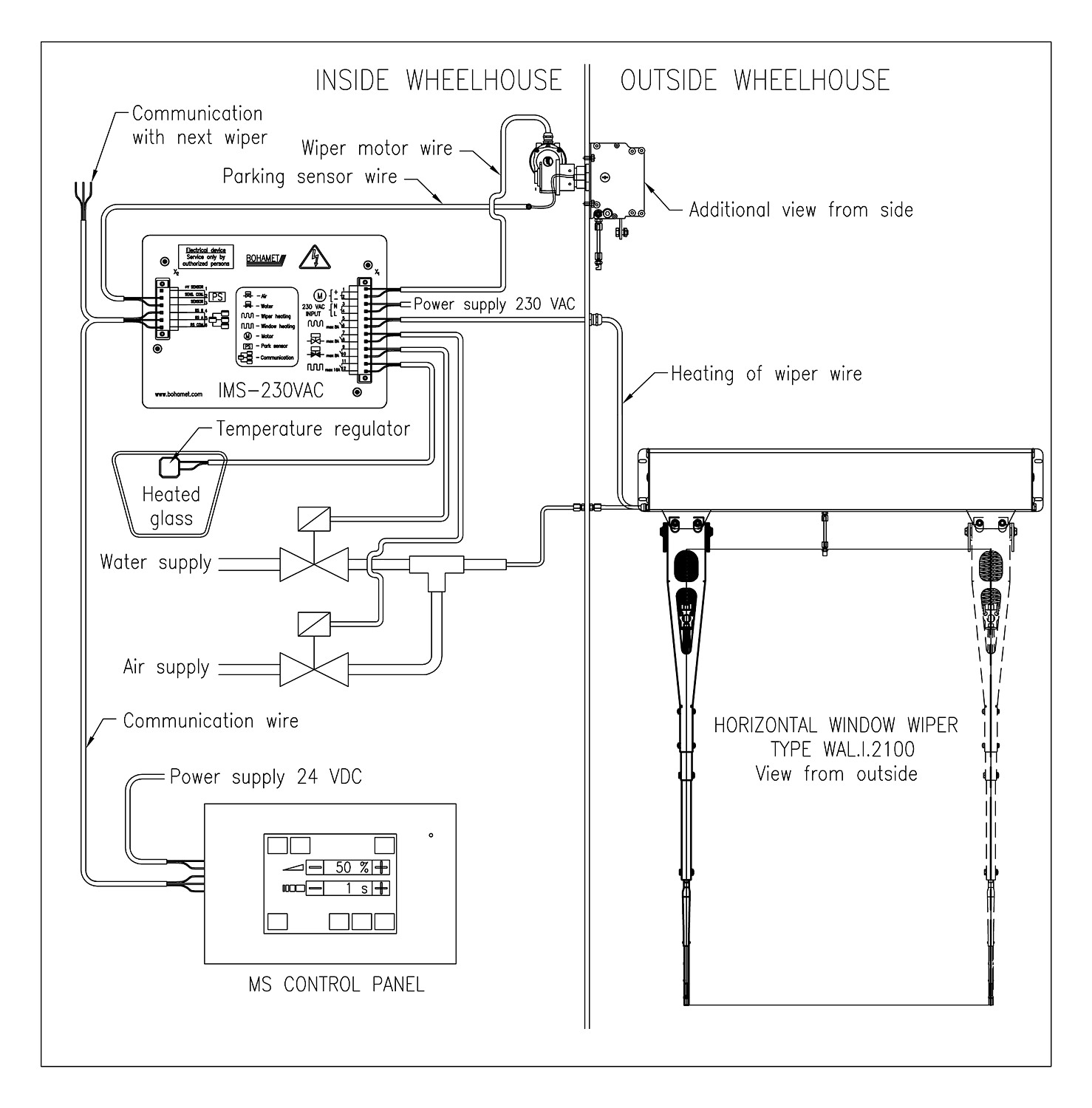
- Optional control system integrated with the drive
- Wide range of supply voltage, and a choice of RAL colours
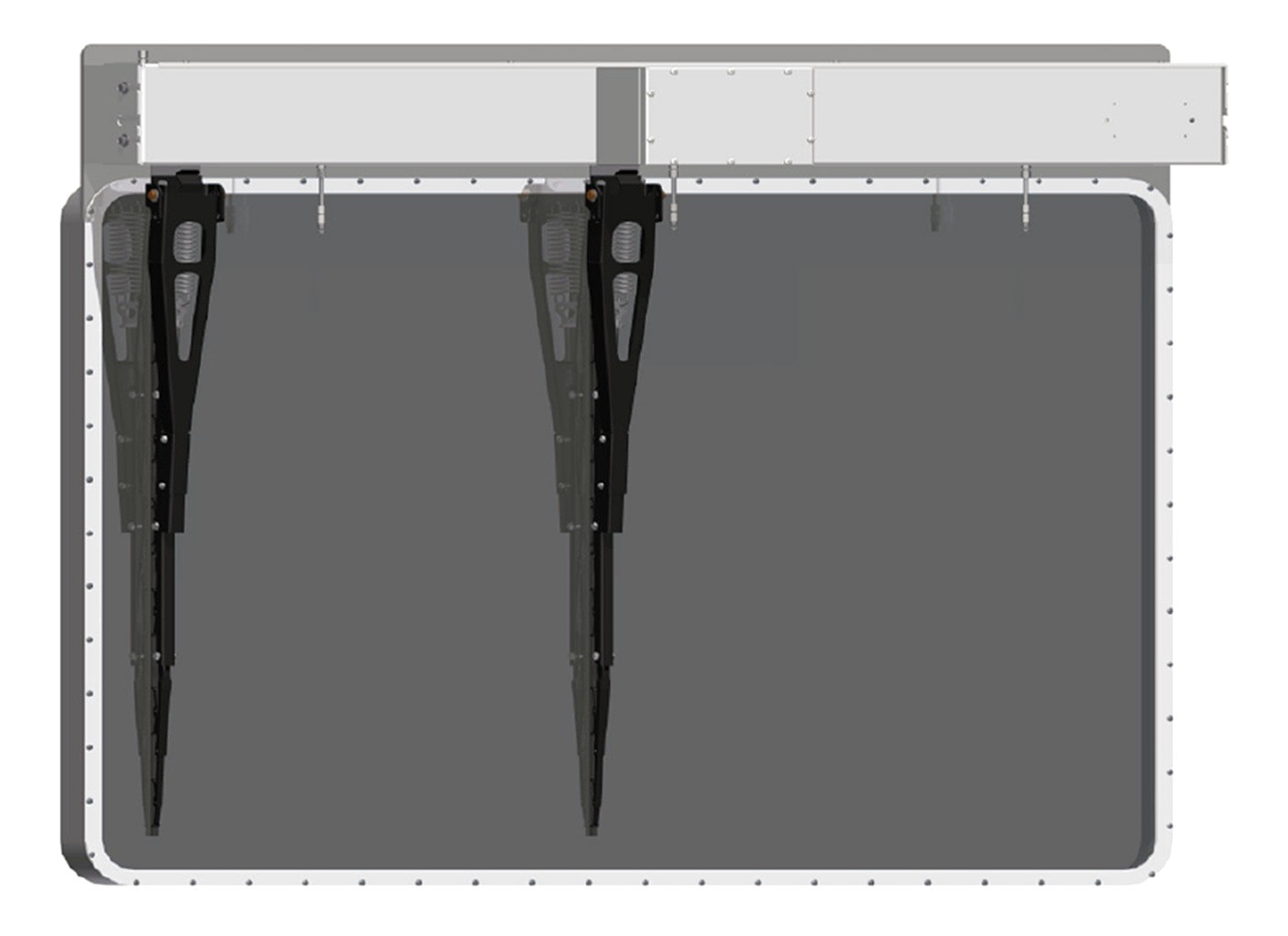
For glazing too large for a single blade, the WL.10.A/B.02 twin wiper puts two units on one window and wipes as much of the surface as the geometry allows.
Pendulum wipers
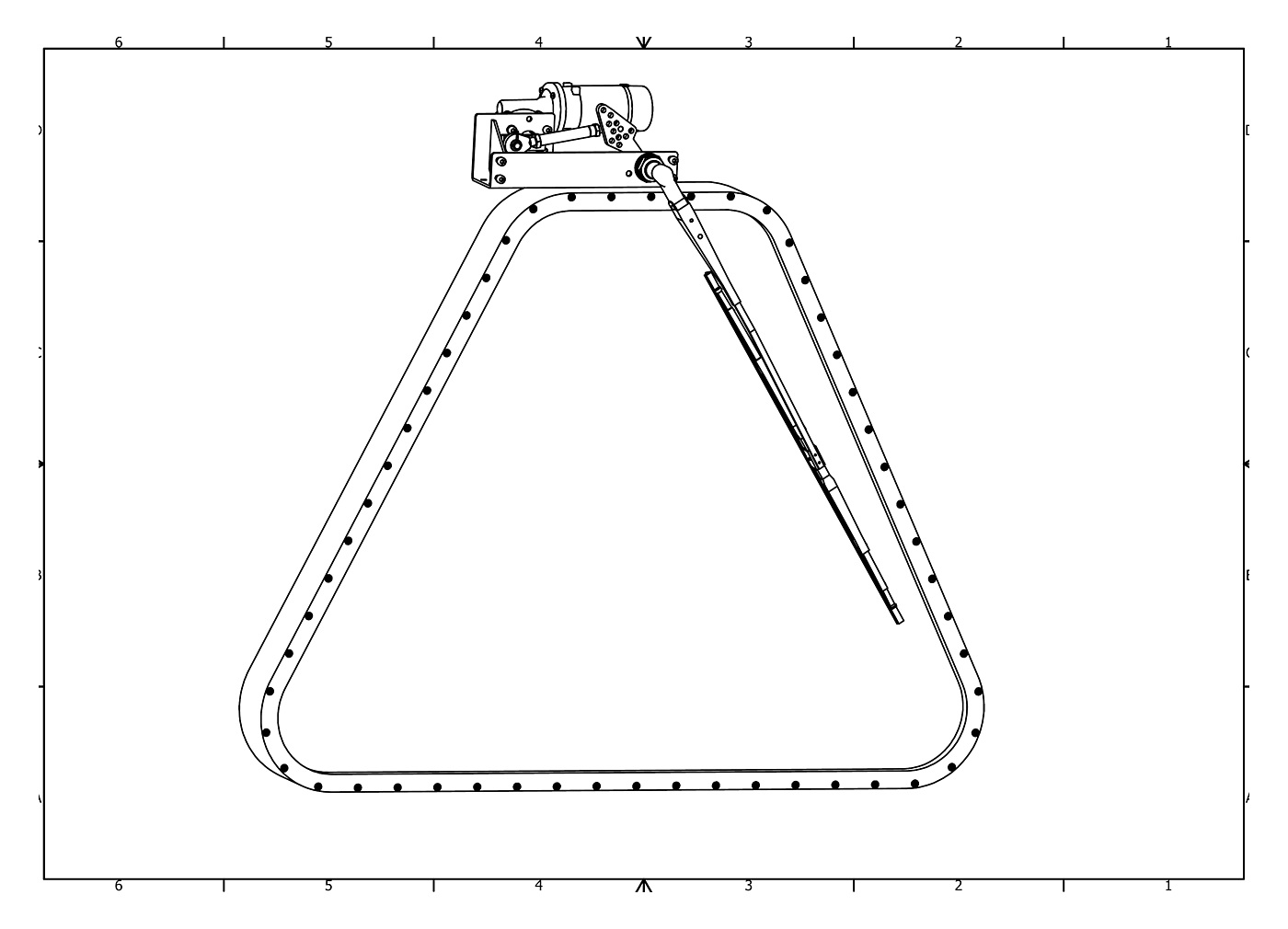
A pendulum wiper swings a single arm from one pivot at the top of the glass. That suits trapezoidal and irregular windows, where neither a pantograph arc nor a straight horizontal track follows the shape of the opening. The W60.16 pendulum drive uses the same heavy-duty mechanism as the pantograph wipers, and the WCP control panels drive pendulum and pantograph wipers alike.
Pendulum wipers are arranged to the individual window, so the sweep is set from the glazing drawing rather than picked from a table. Send the window dimensions and we will come back with the arrangement.
Arms and blades
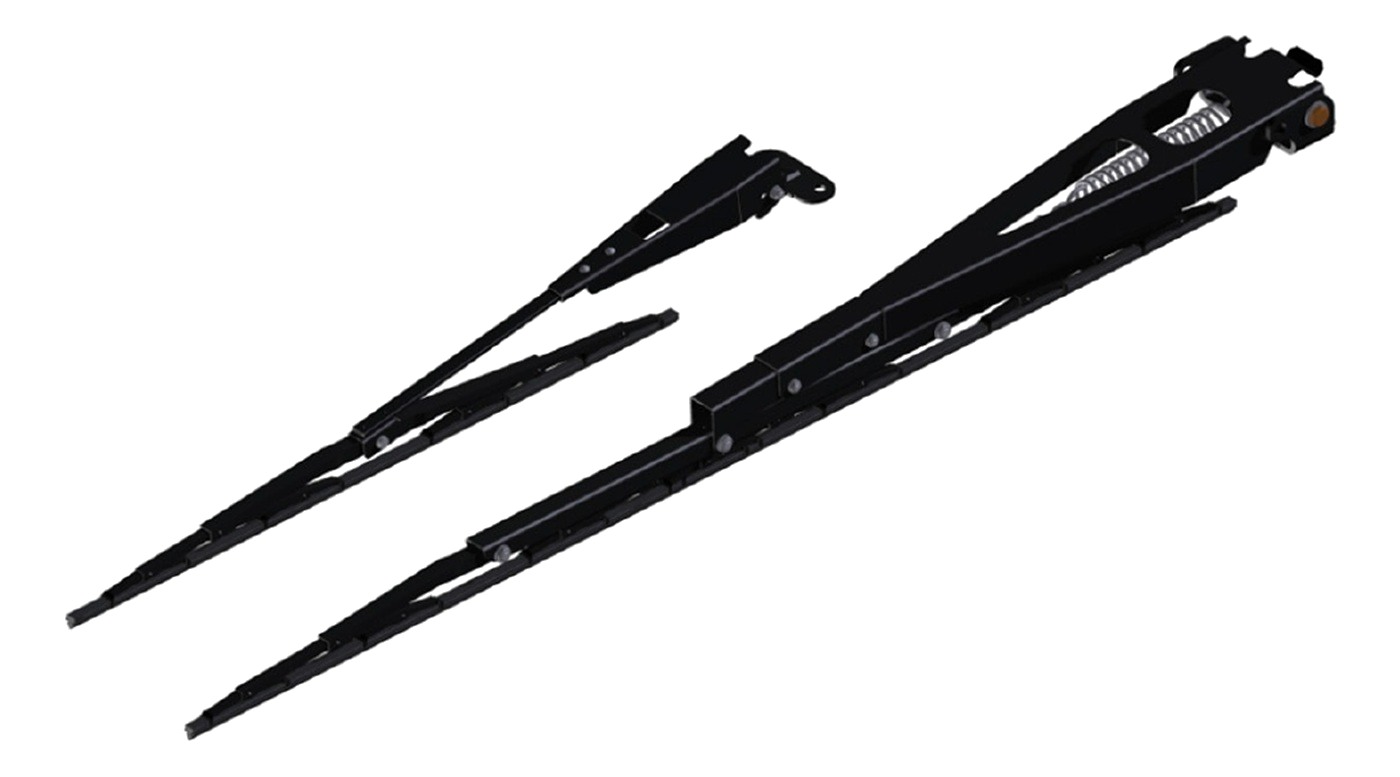
Arms and blades are where a marine wiper is won or lost, and Bohamet publishes the material detail rather than a claim. Both are tested in the salt chamber to ASTM B-117 and hold out for over 480 hours. The arm is designed for heavy-duty work, with an adjustable blade to regulate the pressure it applies.
The arm. Metal parts are steel sheet of increased strength, coated in aluminium and zinc to over 25 µm. The bars are rolled galvanised steel of increased rigidity in grade C45, with a calibrated tip for the blade connection. Fastening heads are aluminium or aluminium/zinc alloy. Sleeves and rivets are turned on automatic precision lathes in approved corrosion-resistant materials. Springs and connectors are specially fabricated in material grade CII, to hold the blade against the glass under any conditions. The head cover is PBT — a technical plastic with high impact strength and resistance to both low and high temperatures — and the paint is a UV and weather resistant polyester resin.
The blade. The rubber is a mixture based on 100% natural rubber with twelve chemical components and graphite added to improve the friction coefficient and eliminate wiping noise. The graphite goes in at the mixing stage rather than being applied to the surface, so it does not deposit on the glass the way surface-treated blades from other makers do. The rubber meets FIAT and GM standards for mechanical properties, wiping effectiveness and ozone resistance. Side spring strips are acid resistant steel grade 1.4301 (1H18N9) with resistance above 1,500 N/mm²; the levers are improved-strength steel sheet with the same 25 µm aluminium and zinc coating, and the plastic elements are PBT.
Control panels and modules
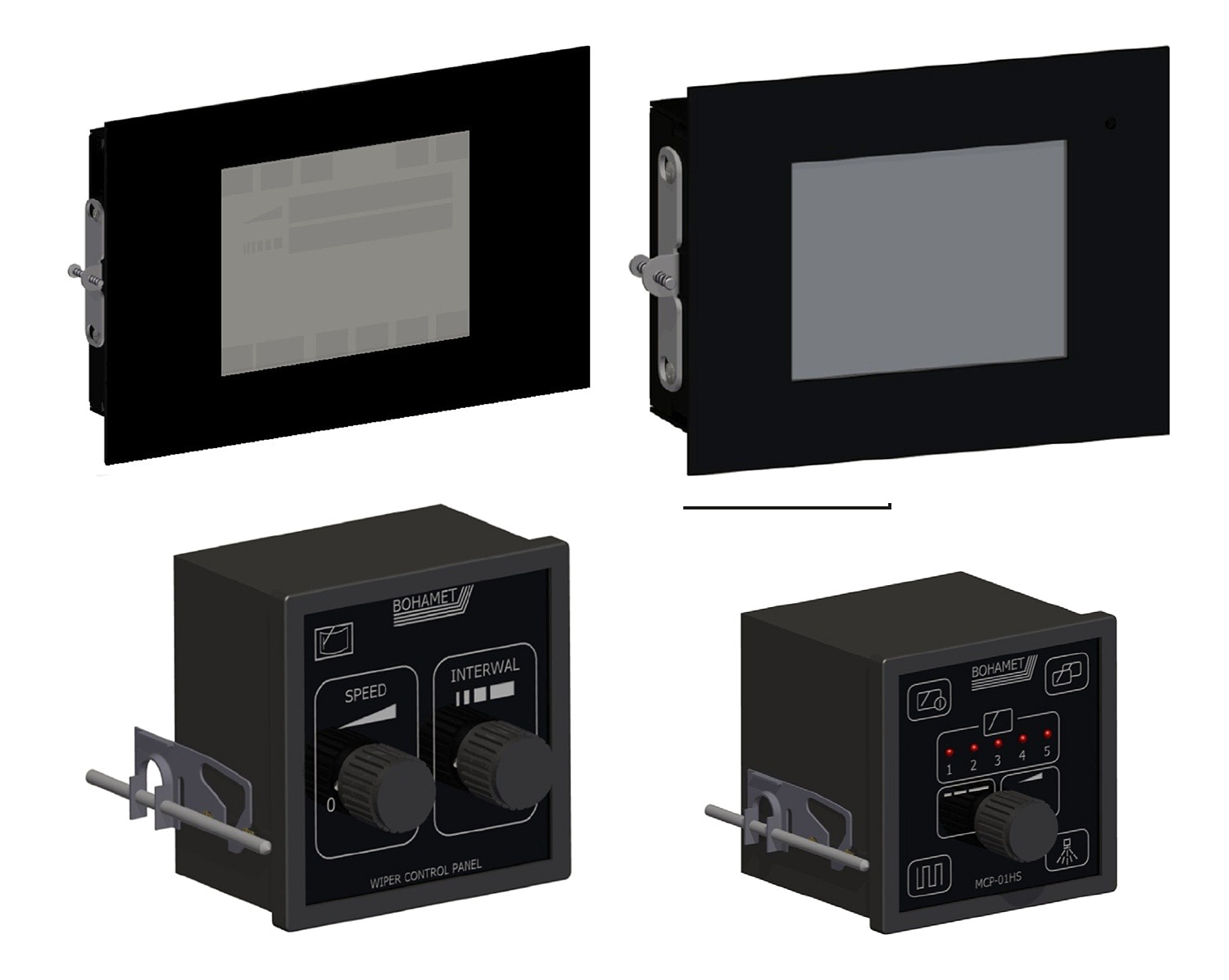
Control runs from a single rotary switch to a networked touch panel, and the choice is set by how many wipers there are and whether heating and washing have to be controlled from the same place.
WCP rotary panels handle one to six wipers with on/off and two speeds on a 24 VDC supply. They work with pantograph and pendulum wipers only.
WCP.P.S1 is a simple panel for a single wiper of any type, working with the EMS 24 VDC control module and giving on/off, speed and interval control.
MCP.01.HS is the multi panel: up to five wipers, with on/off, grouping, heating control (on/off only), spraying, blowing, speed and interval. It works with IMS modules.
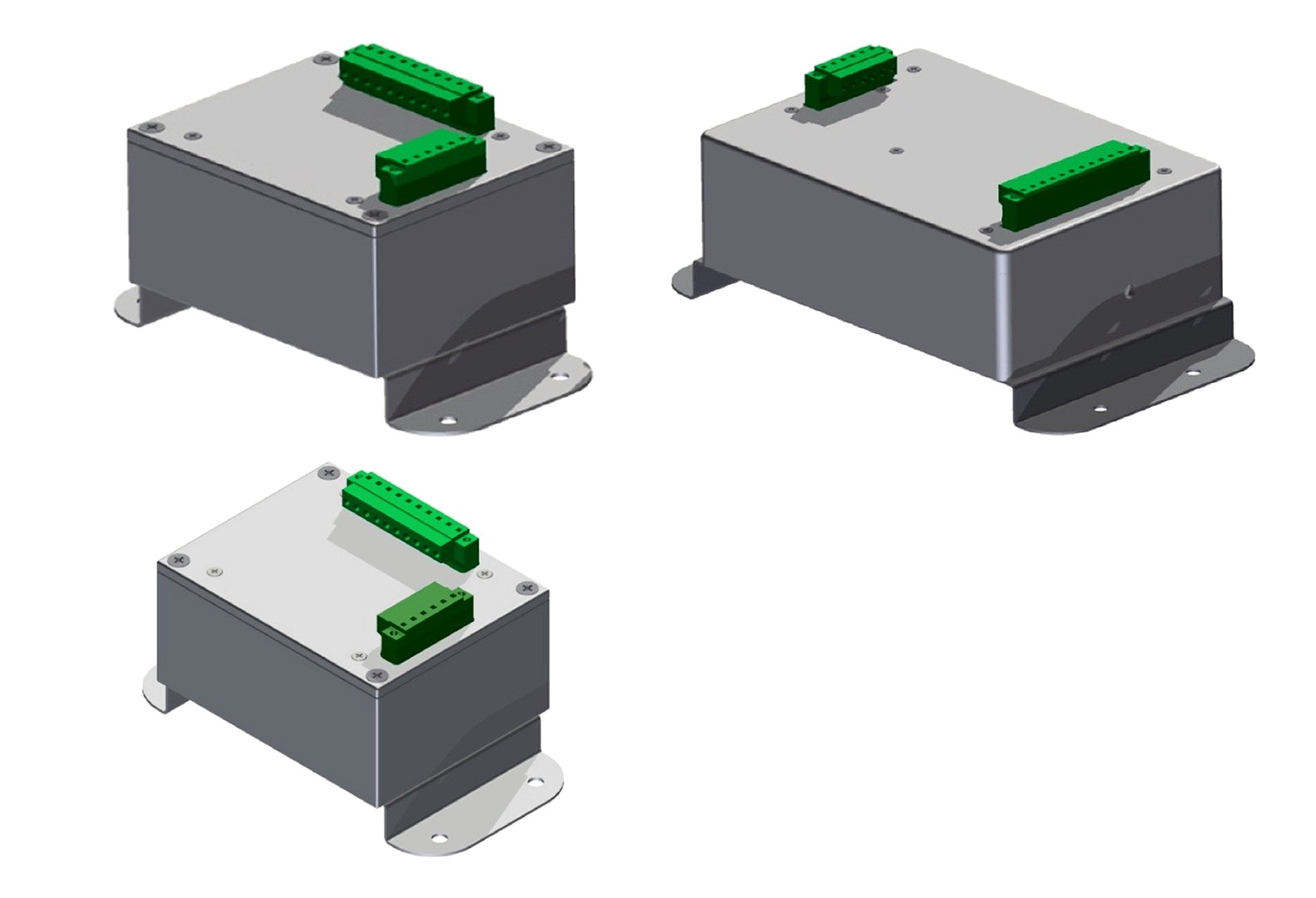
Multi Control System (MS) is the main system. An LCD touch panel in 5.7″ or, as the MMS, 3.5″, running on 24 VDC and operating up to 80 wipers in one network across 5 control panels. Every wiper takes its own IMS individual control module, in 24 VDC or 230 VAC. From the panel the wipers run in groups or all together, washing starts with the wipers or automatically, the time for water to reach the window is set per group, module failure alerts are reported and cleared, and brightness and language are set on screen.
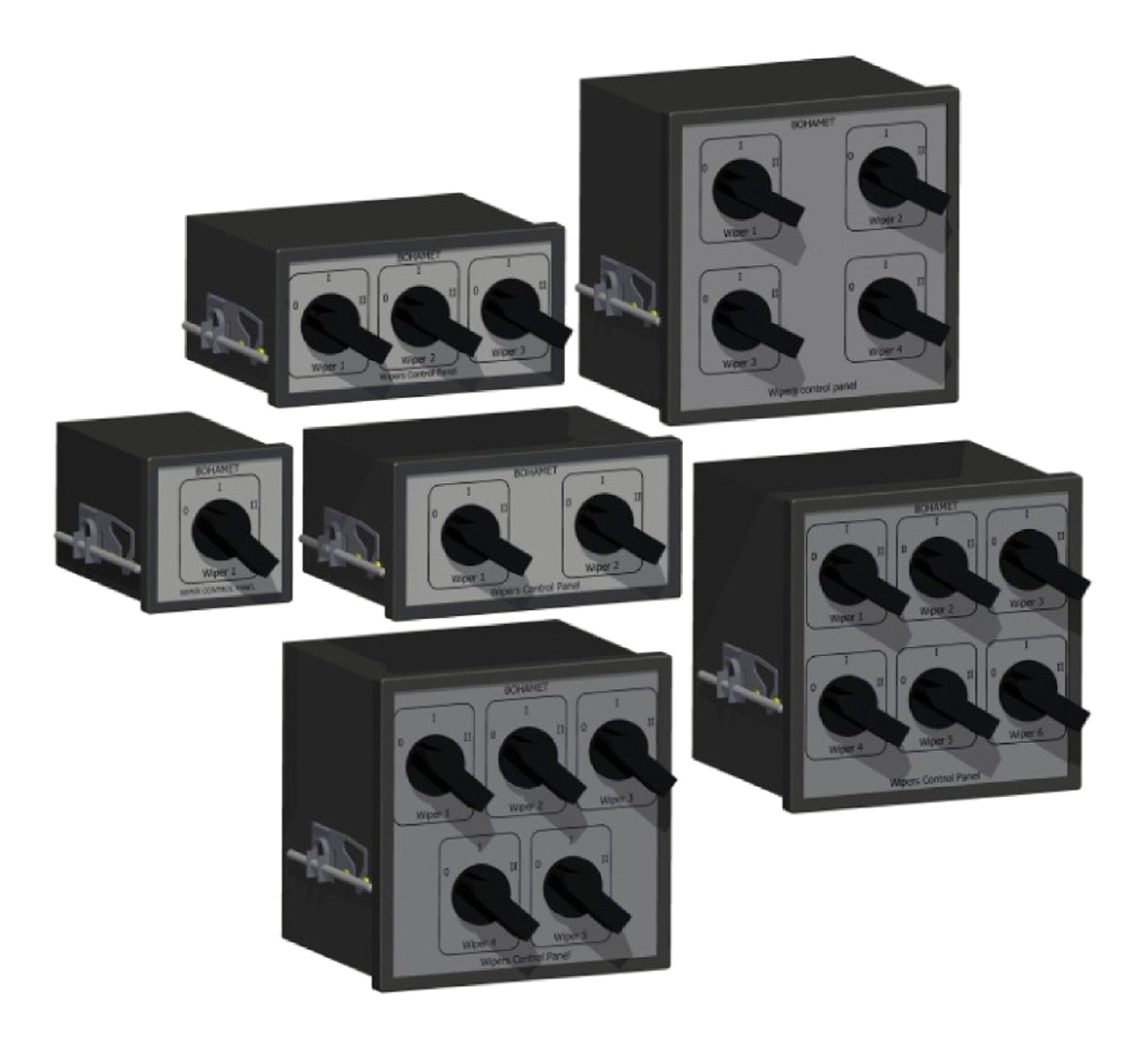
| Panel | Supply | Works with | Wipers | Functions |
|---|---|---|---|---|
| WCP.P.S1 | 24 VDC | All types | 1 | On/off, speed, interval |
| WCP.P.S2 | 24 VDC | All types | 1 | On/off, speed, interval, heating, spraying |
| WCP.S1 to WCP.S6 | 24 VDC | Pantograph W60.16-A only | 1 to 6 | On/off, speed |
| WCP.W1.HS to WCP.W4.HS | 24 VDC | All types | 1 to 4 | On/off, speed, interval, heating, spraying |
| MS + IMS | 24 VDC or 230 VAC | All types | 1 to 80 | On/off, speed, interval, heating, spraying |
“All types” means horizontal wipers of every type plus the W40.16-A and W60.16-A pantographs. Within the WCP.S and WCP.W families the models differ only in how many wipers they drive.
Washing systems

Bohamet manufactures the spraying system as well as the wipers. It is fully automated for both spraying and blowing of the windows, and it will run detergents and anti-freeze with the fresh water — which is what makes it useful in a climate where the glass ices rather than simply gets dirty. Units are also built for special systems where the standard arrangement does not fit.
Water tanks run from 10 to 100 litres, with a 12 VDC water pump and a non-return valve, and can be fed from the ship’s fresh water supply through a 1 inch pipe.
Accessories
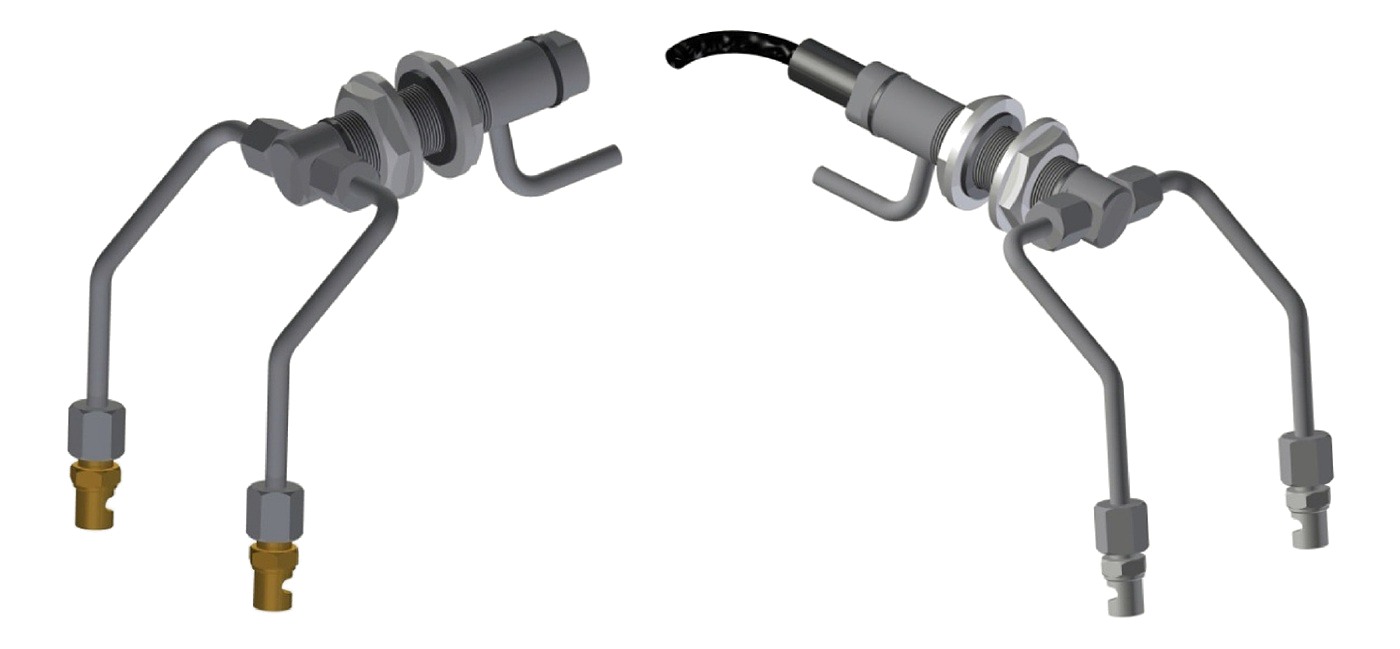
Spraying nozzles in a plain version and a heated version — the heated nozzle keeps the water line clear where the spray would otherwise freeze at the outlet. Solenoid valves for the water and air lines complete the installation.
Approvals and testing
The four horizontal wipers — WL.10.A.01, WL.10.B.01, WAL.I.2100 and WAL.E.2100 — hold DNV type approval certificate TAA00001CE, revision 1, issued 10 April 2023 and valid until 9 April 2028. Products approved by that certificate are accepted for installation on all vessels classed by DNV.
The approval covers the control system with them: MPCS-230-AC and MPCS-024-DC, each made up of the IMS individual control box and the MSH-24VDC or MMS-24VDC touch panel, plus the MS_24_VDC control panel in its own right.
| Tested for | Standard |
|---|---|
| Environmental | IEC 60945 (2002) |
| Presentation | IEC 62288 (2014) |
| Performance | ISO 17899 (2004) |
Three limitations on the certificate are worth knowing before the specification is fixed rather than after:
- Motor parts for the WL.10.A.01 must be installed in a protected area as defined by IEC 60945 — which is the practical reason to choose the WL.10.B.01 or WAL.E.2100 where no such area exists.
- The MMS is a smaller version of the MS and can operate as an individual component, but it has to operate together with an MS to comply with the rules.
- On ships carrying class notation NAUT-AW, NAUT-OC or NAUT-OSV(A), the wiper system has to meet the minimum blade coverage required by that notation. Check it against the window size before the arm and blade lengths are settled.
Wipers are designated on the certificate as SL – I or E – SSSS – AAAA – BBBB – 220 or 024 – DC, where I is the divided drive installed inside the ship and E the motor integrated with the mechanism; SSSS, AAAA and BBBB are the operating range, arm length and blade length in millimetres.
Certificates are held on file and issued with the order. Bohamet also holds ISO 9001 certification for the works.
Choosing a wiper
| If the window is | Use |
|---|---|
| Small or narrow, and an arc sweep is acceptable | Pantograph W40.16-A |
| Large and heavy duty, and an arc sweep is acceptable | Pantograph W60.16-A |
| Very wide and needs the maximum cleared area | Pantograph W60.16-A.02 twin |
| Fixed or opening, with the drive mounted on the glass itself | Pantograph W40.16-A.C |
| Served from inside with no room for an exposed drive | Pantograph W60.16-Z, sealed to IP67 |
| Rectangular and needs the largest possible cleared area | Horizontal WAL.I.2100 or WL.10.A.01, drive inside |
| Rectangular, with no space for a drive inside the wheelhouse | Horizontal WAL.E.2100 or WL.10.B.01, sealed drive outside |
| Large enough to need two blades | Horizontal twin WL.10.A/B.02 |
| Trapezoidal or otherwise irregular | Pendulum W60.16 |
Wipers are supplied to the window, so the arm and blade lengths follow the glazing rather than a stock list. See also Bohamet fire rated windows and fire rated doors.